
Successful Interior Design Presentations: 4 Ways to Win the Client
Contents⌄
A successful interior design presentation is critical not only for showcasing your project effectively, but also for capturing your audience's attention and earning their trust. A good design can be lost through a poor presentation. Here are 4 essential ways to win the client.
1. The Power of Visuals and Photorealistic Rendering
An interior design presentation reveals not just a visual representation of the design, but the thinking behind it. 3D models and high-quality renders are the strongest tools for helping clients imagine the finished project.
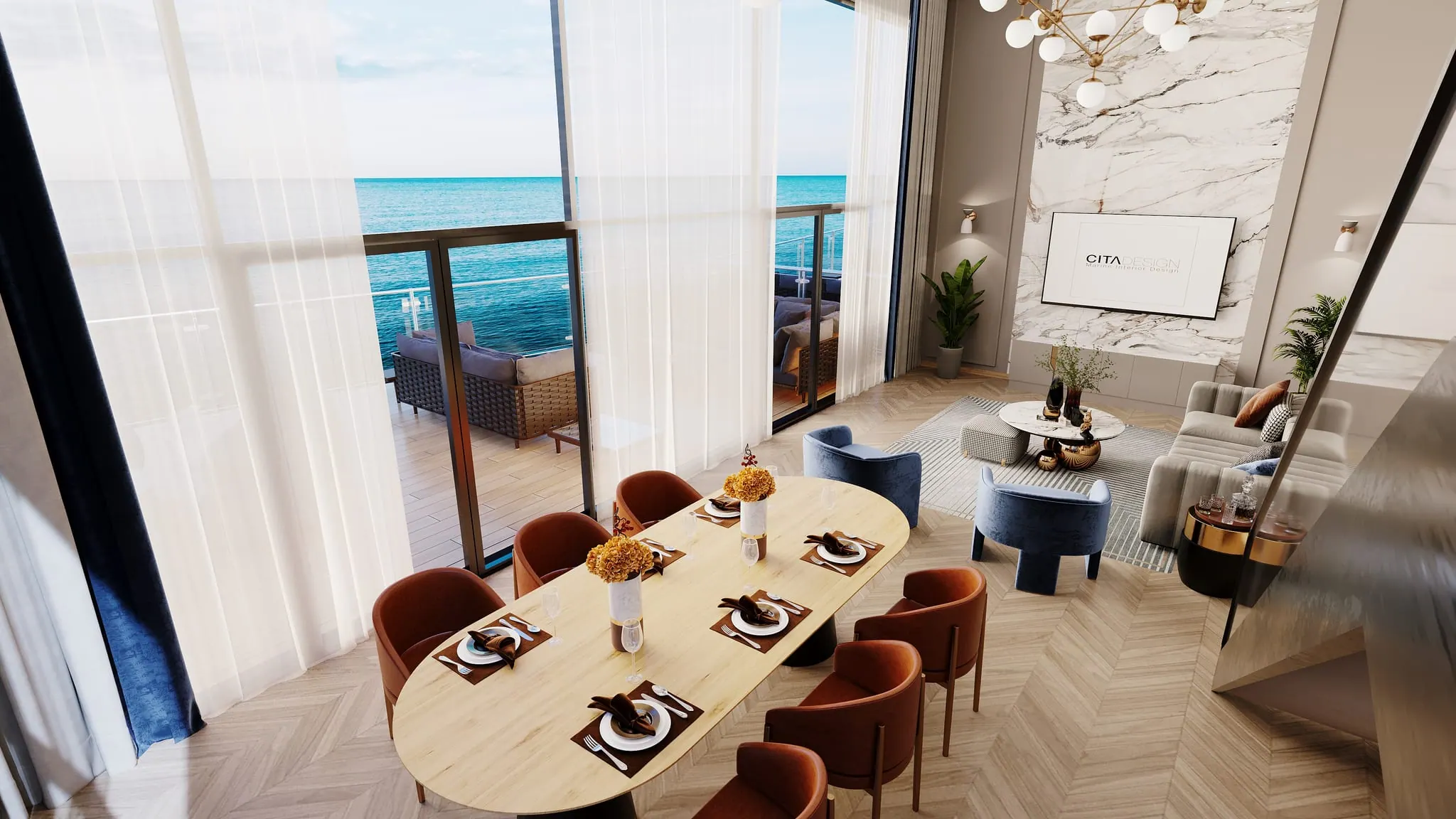
Photorealistic images produced with Cinema 4D and V-Ray let the client experience the space before it is built. A render prepared with the right light, material and furniture detail establishes trust in the first second.
High-quality interior rendering for presentations
2. Storytelling and the Material Experience
Presenting the design as a problem-solving journey and a story helps the listener form an emotional connection with the project. Answering "why this material, why this colour" lifts the design out of being a set of arbitrary choices.
Physical material samples and texture boards ground the presentation in reality. Letting the client touch and feel the natural stone, timber and textile is far more convincing than an image on screen.
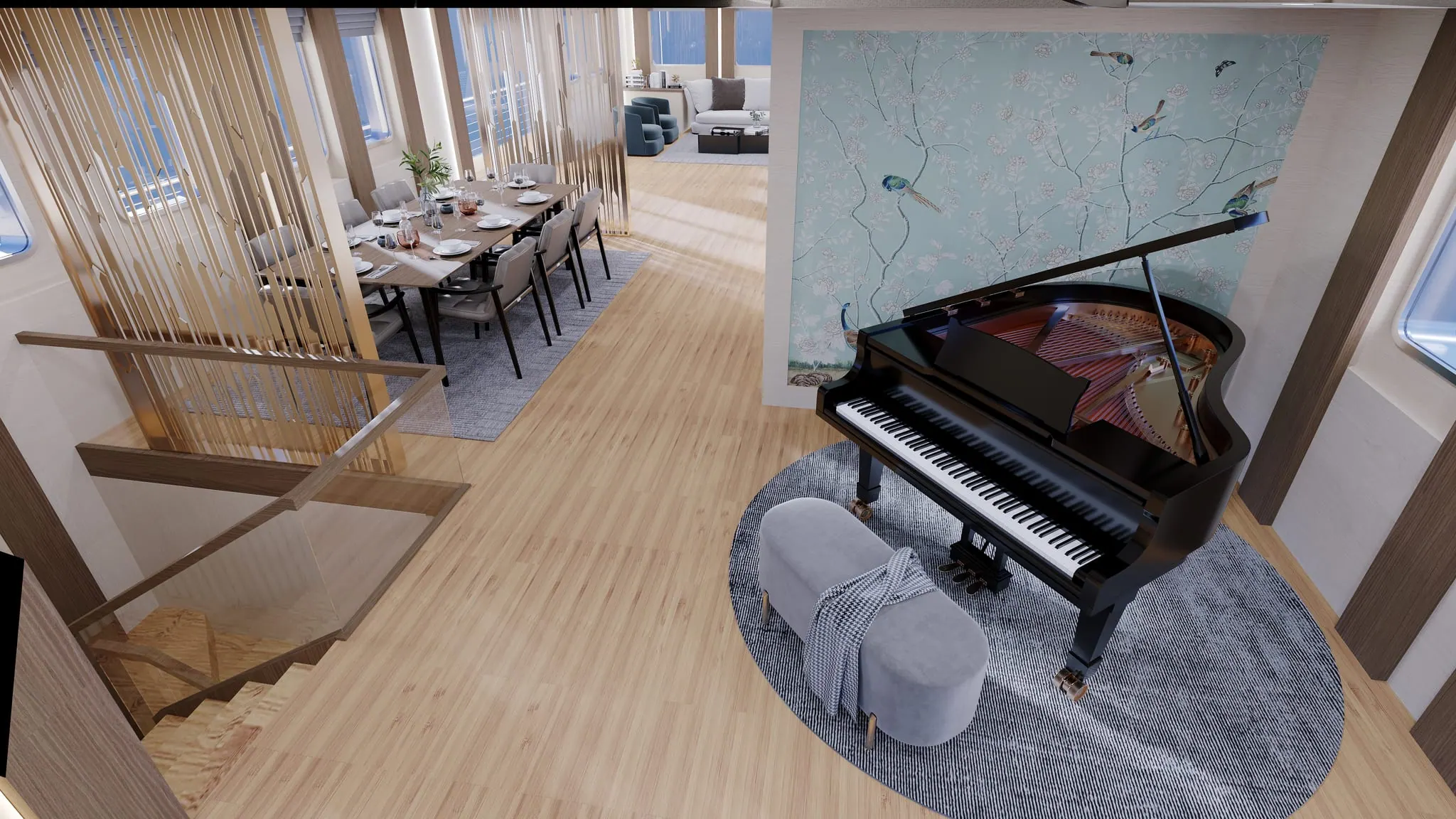
Material board and storytelling in architecture
3. Audience Analysis
Who you present to determines the content. Speak to an investor in terms of ROI, cost and operational efficiency; speak to an end user in terms of quality of life, comfort and aesthetics.
Presenting the same project to two different audiences in the same language is the most common mistake. Understanding your listener's priorities before the presentation lets you foreground the right arguments.
4. Simplicity and Common Mistakes
Drowning in technical jargon, low-quality visuals and too many slides all weaken a presentation. A strong presentation is built on a few powerful images and clear narration.
Each slide should carry a single message; offering one well-reasoned recommendation rather than many indecisive alternatives moves the client to a decision faster.