
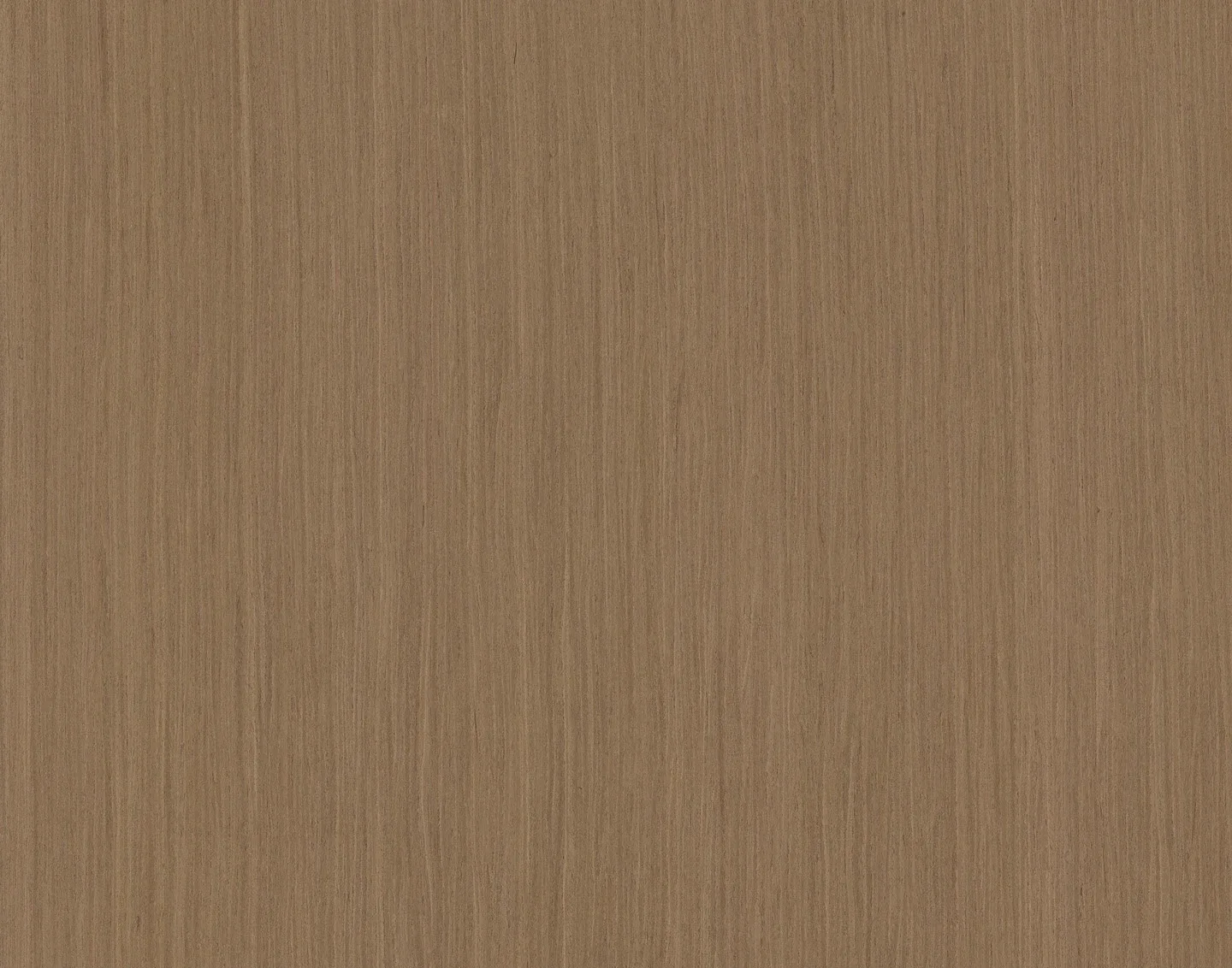
Wood Veneer Technical Guide | Interior Materials
Interior Design ProjectIn interior projects the material decision sets the perceived quality of the whole job. This page collects the technical reference I use when specifying wood veneer on hotel and residential projects: what veneer is, how it is cut, how it is matched, and which failures show up on site.
What Is Wood Veneer?
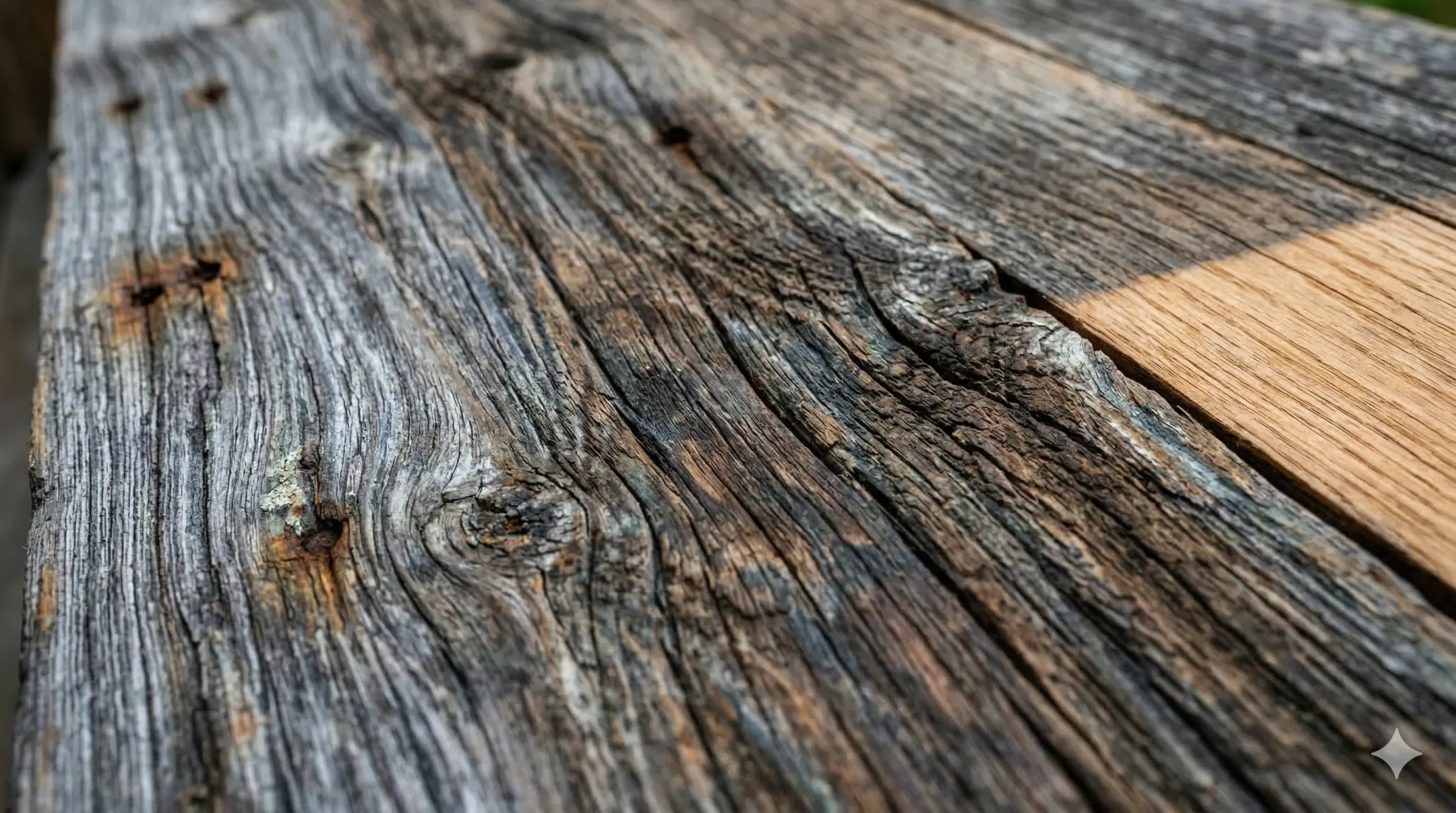
Veneer is produced by slicing valuable logs such as walnut, oak or ash into leaves of millimetric thickness on dedicated machines. Standard thickness is 0.5 to 0.6 mm.
These leaves are pressed onto a carrier panel, usually MDF or chipboard, at roughly 120°C with specialised adhesives. The result looks solid from the outside but is technically far more stable.
There are two gains. Dozens of surfaces come from a single log, so forest resource is preserved. And thanks to the MDF core the panel does not crack or twist with heat and humidity; the movement allowance of solid timber disappears.
Oxidation and Patina
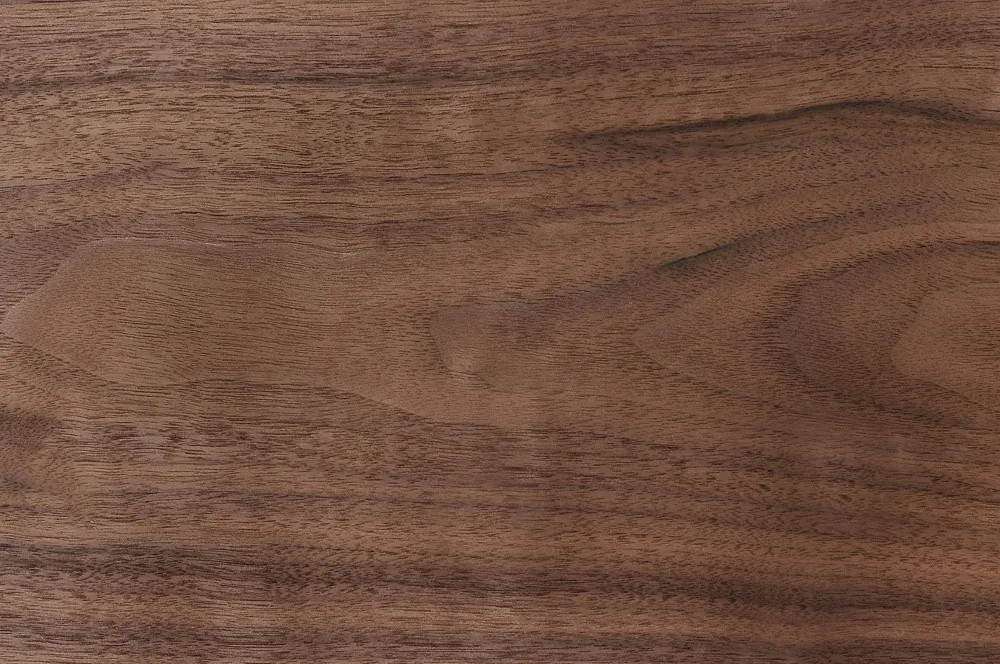
Wood is anisotropic and hygroscopic; it takes on and releases moisture with the ambient humidity. But the defining behaviour in veneer is oxidation.
Tannic acids in the cells change colour on contact with ultraviolet light. Cherry reddens quickly; American walnut opens towards a golden tone over time. This is the material's natural course, not a defect: the colour seen at handover is not the colour six months later.
On site this has one practical consequence. Nothing fixed should be left on a newly veneered surface for the first three months. The area underneath will not oxidise, and a lighter mark stays behind when the object is moved.
Veneer Classification
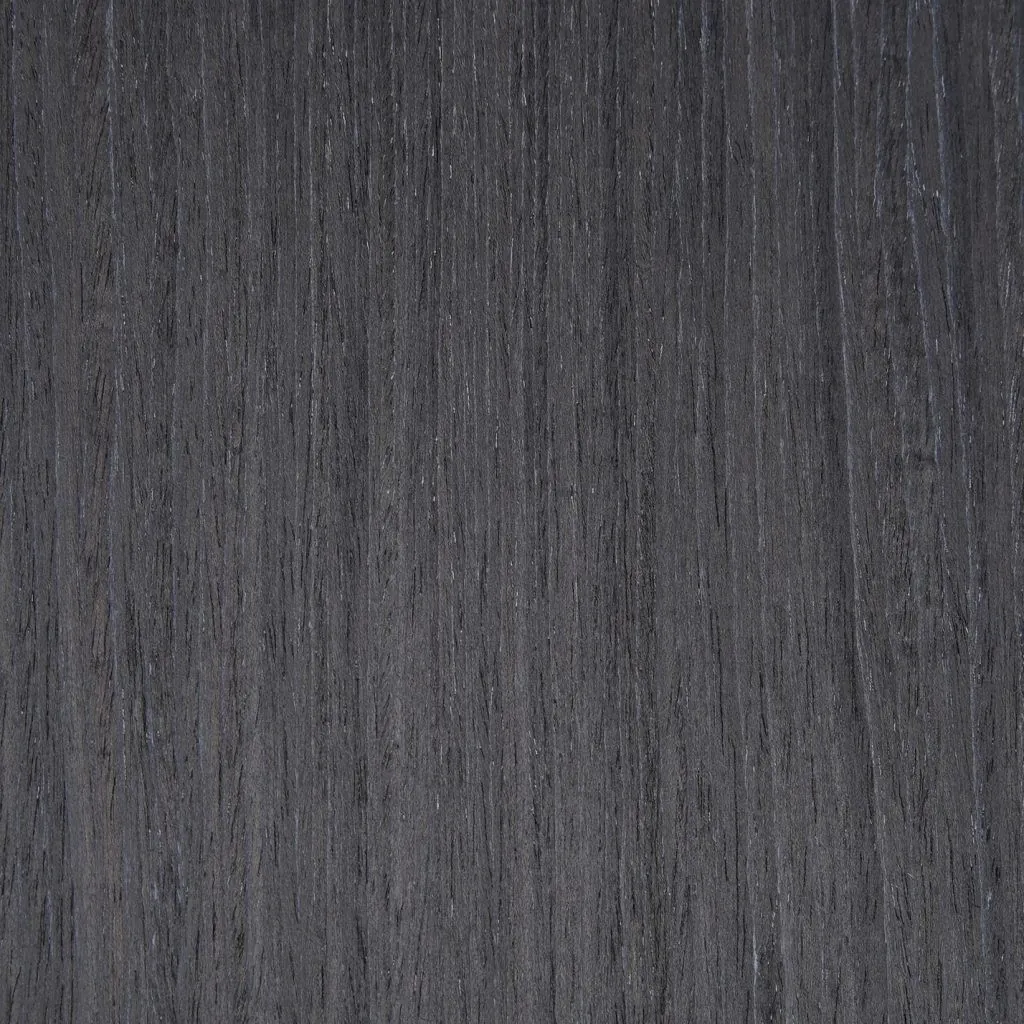
Natural Veneer
Leaves cut directly from the trunk. Every log has a grain as individual as a fingerprint; no two projects are alike. It carries the highest prestige and the strongest sense of genuine material. The risk is achieving colour and pattern consistency.
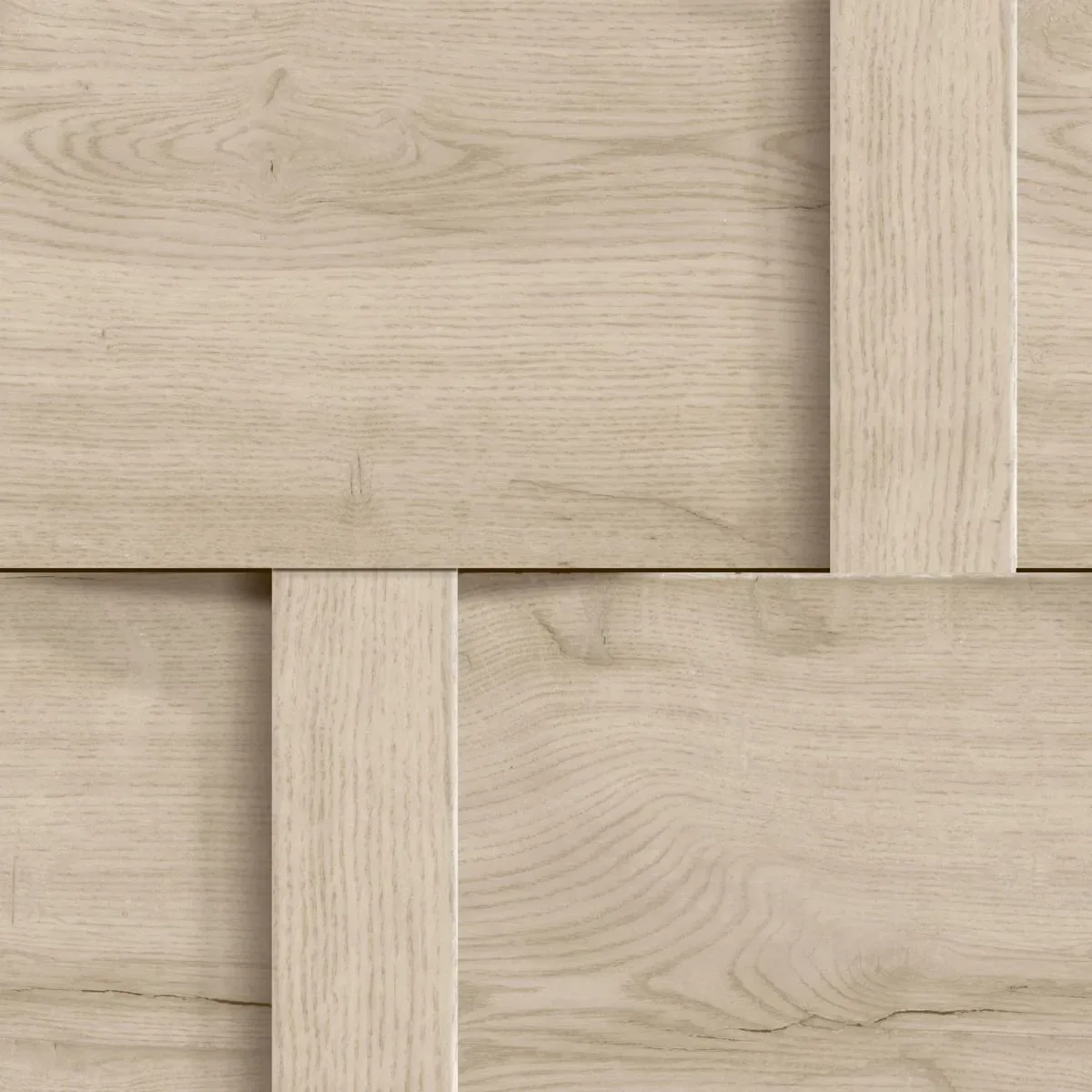
Engineered (Alpi) Veneer
Produced by dyeing and pressing fast-growing industrial timber. It offers full homogeneity, meaning colour continuity is guaranteed. For retail chains and large office projects, where many panels must agree with each other, this is the correct choice.
Dyed and Burl Veneers
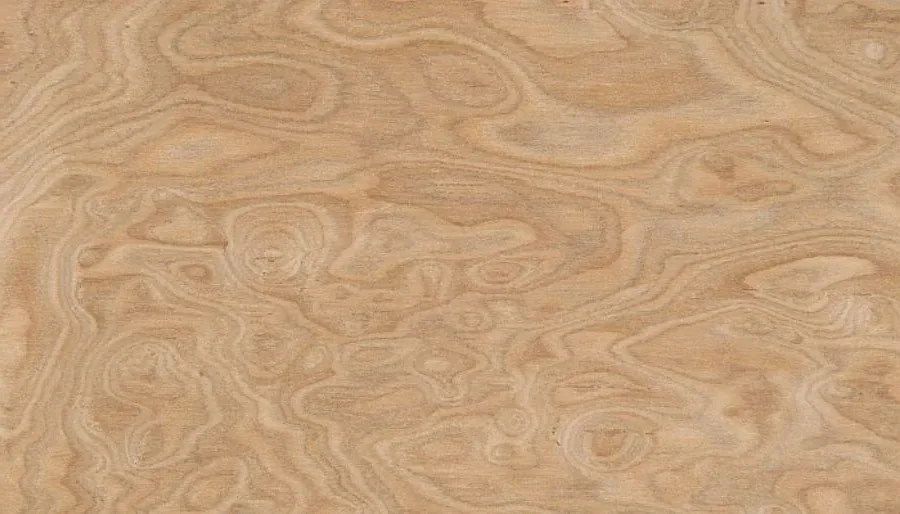
Dyed veneer keeps the natural grain while colour is introduced in vats. Burl veneer comes from the tree's growth, giving swirling cloud patterns; it is used in luxury yacht and private jet interiors.
Melamine and Digital Print
Not real wood; decor paper pressed with resin. It is the most scratch-resistant and economical option, resists chemicals and needs no maintenance. Where heavy use matters more than material authenticity, it is the rational specification.
Cutting Technologies
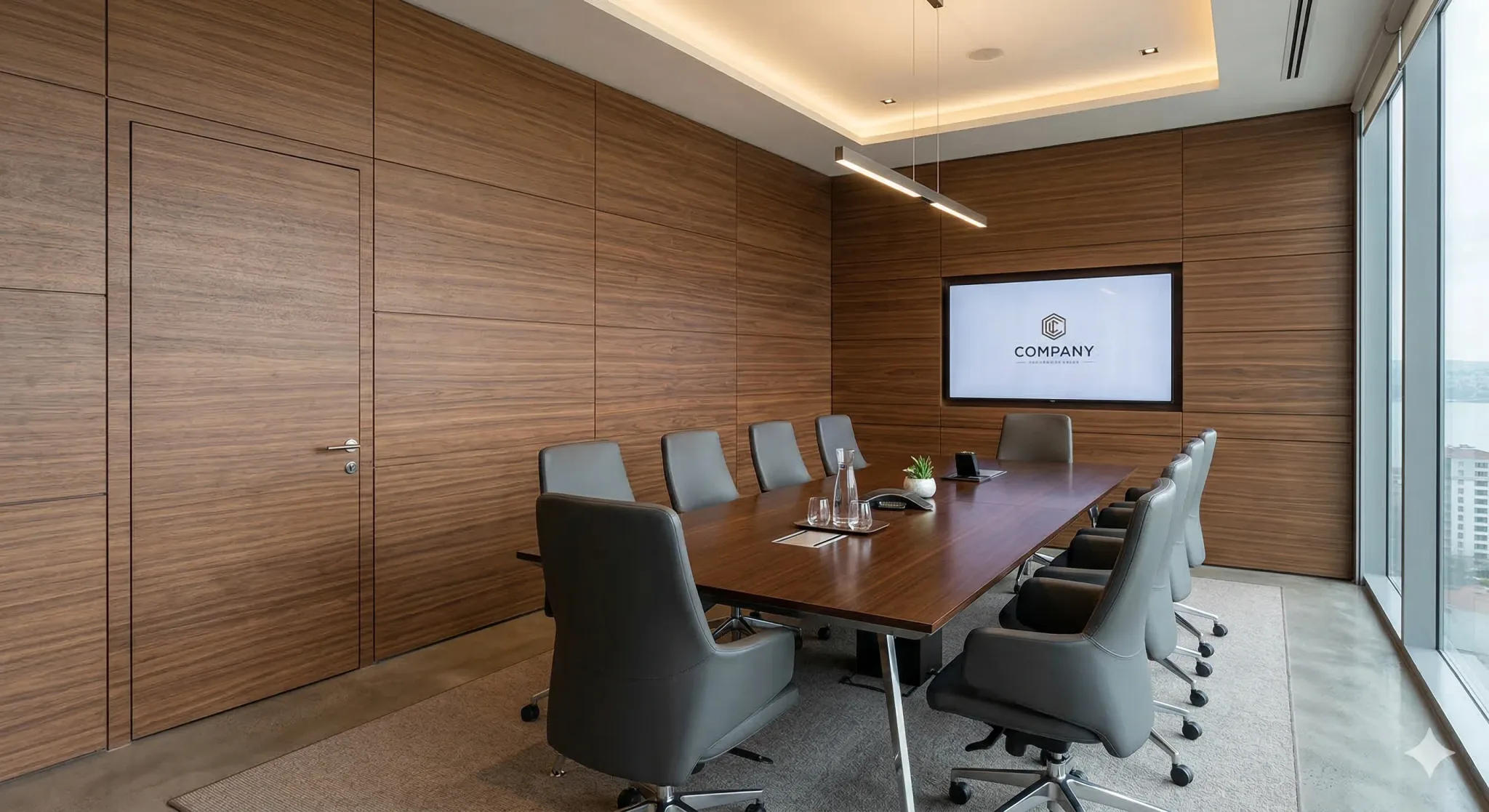
How the log is cut determines the pattern on the face.
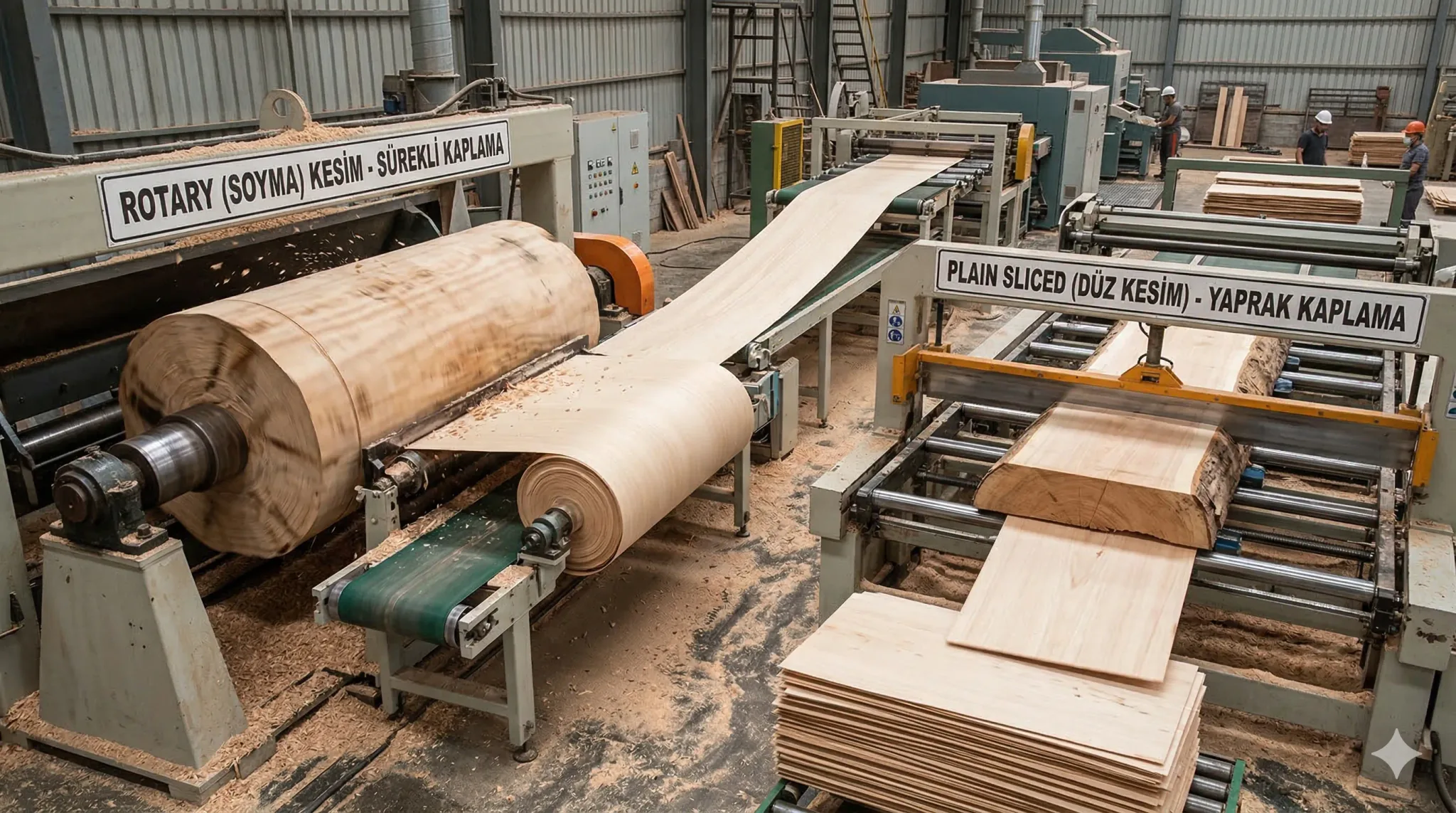
- Rotary: The log is peeled continuously, like a pencil sharpener. Gives very wide, active figure.
- Plain sliced: The most common architectural cut, producing the figured pattern known as cathedral.
- Quarter / Rift: Gives flawless straight lines. The choice of modern, minimalist design.
Panel Anatomy
A veneered panel is a layered system, not one material. From the face inwards: lacquer or varnish, the 0.5 mm wood leaf, high-temperature adhesive, and the MDF carrier. Each layer sets part of the panel's total performance; a fault in one shows across the whole surface.
The Art of Matching
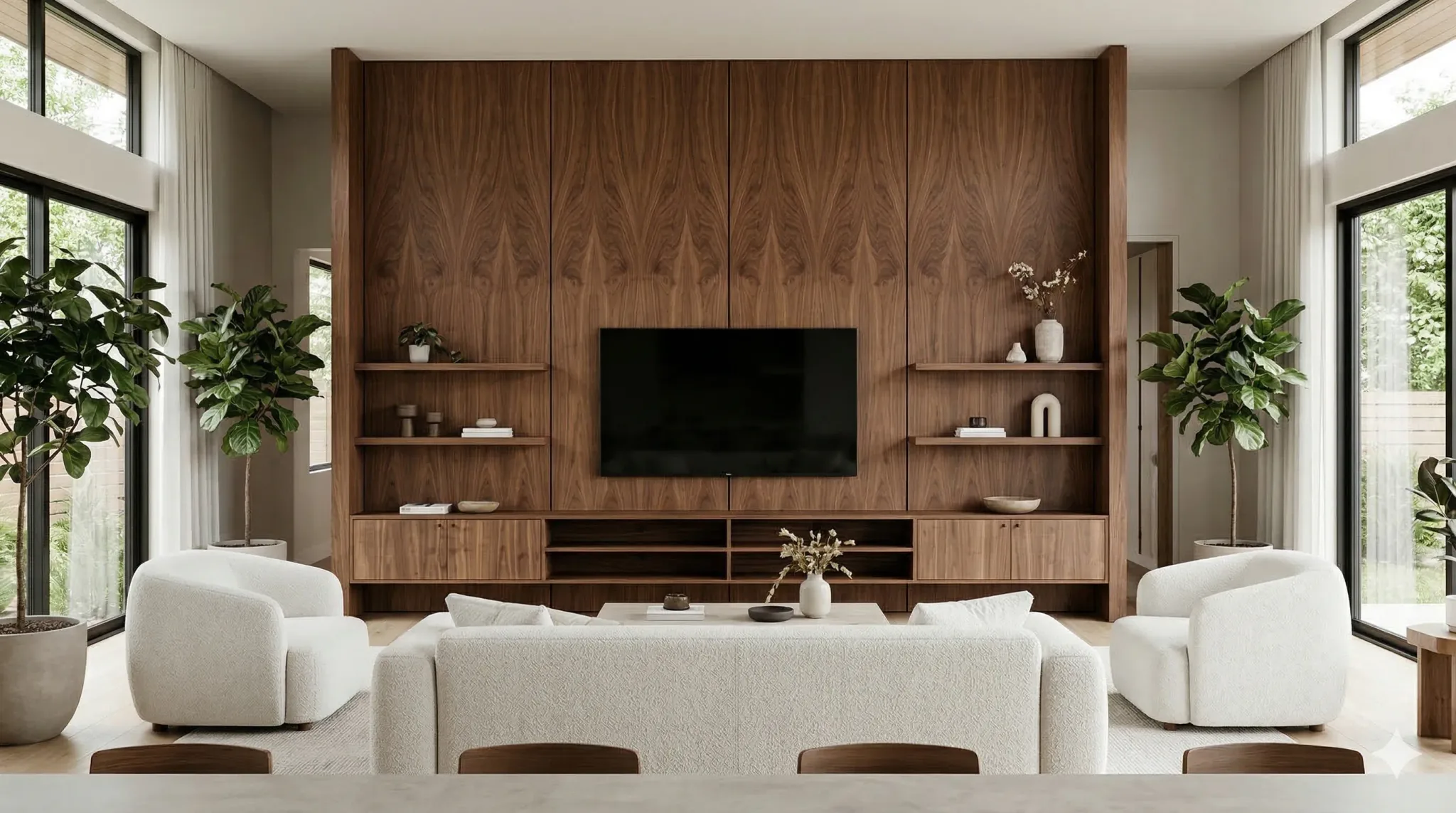
How leaves are placed side by side builds the symmetry of the room. This is the design decision within the veneer job.
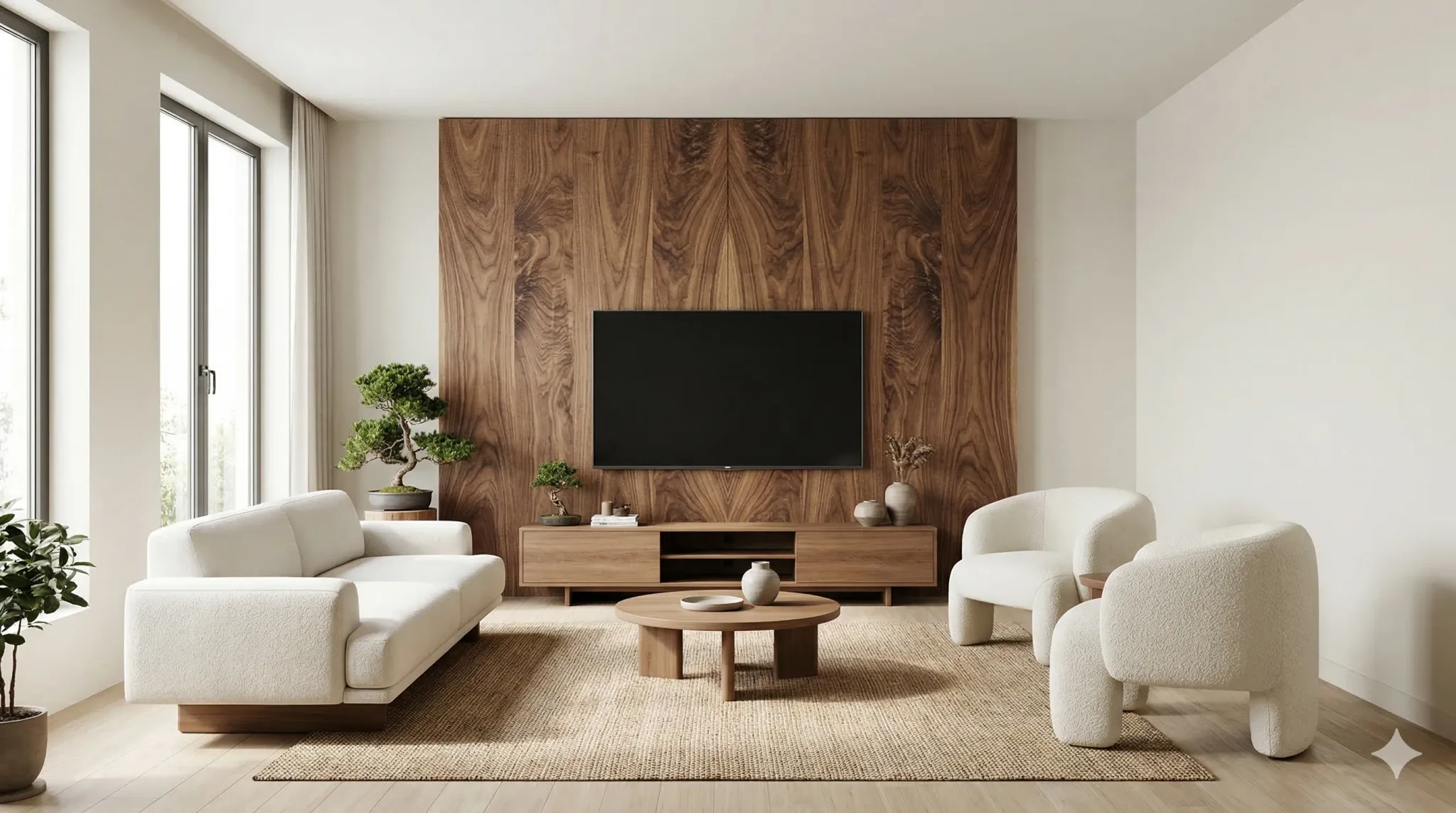
- Book match: Leaves open like a book for full symmetry. Creates a grand effect.
- Slip match: Leaves are slid alongside one another, preventing the colour gradient known as ombre.
- Blueprint match: Every panel in the space is calculated from a single log. The peak of matching, and the most expensive to set up.
Common Site Pathologies
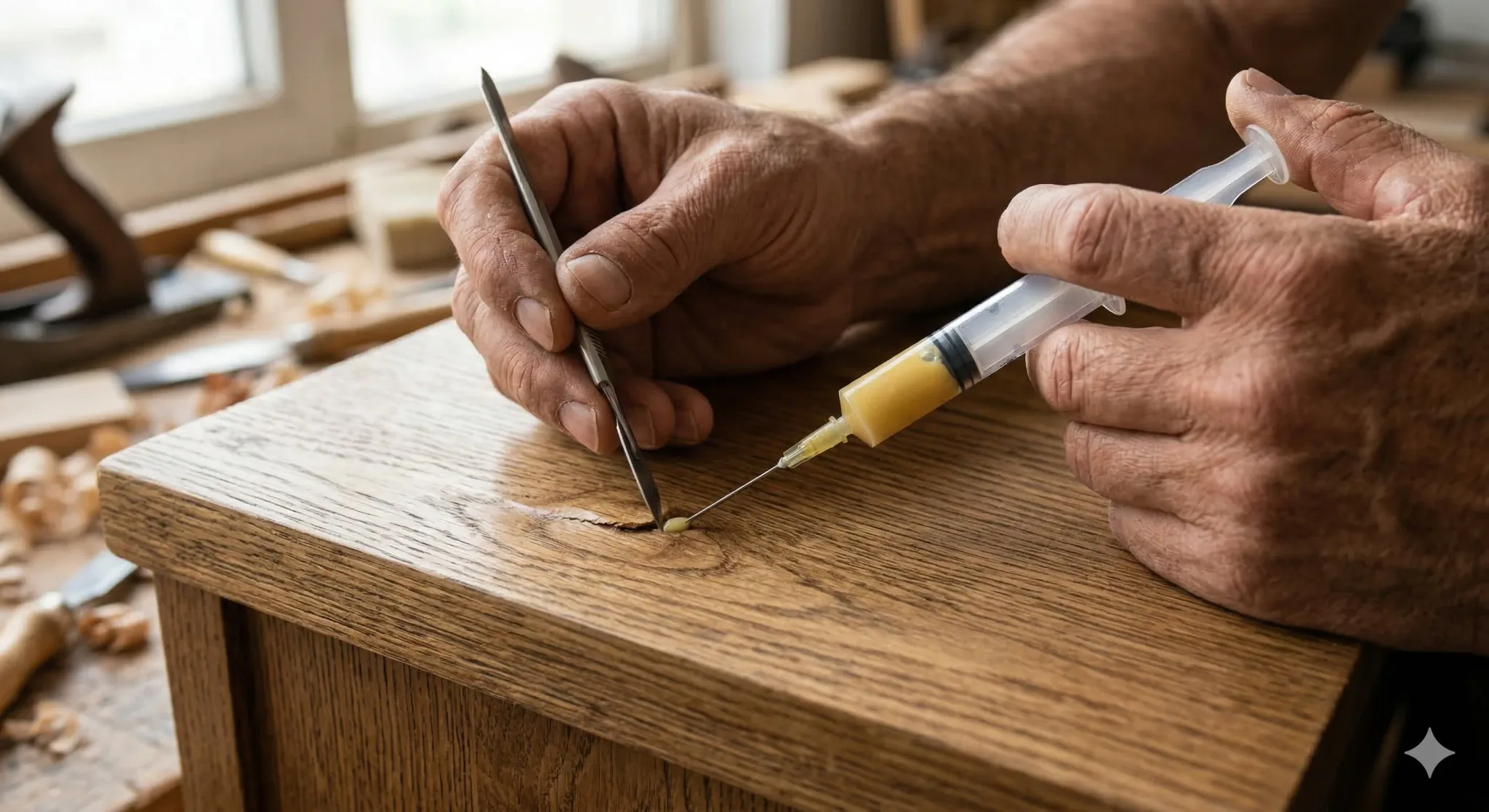
- Bubbling: Caused by uneven adhesive or ambient humidity. Can be treated with heat and pressure.
- Bleed-through: Adhesive from the back face seeping through the veneer leaf and staining it.
Most of these are prevented by one rule: panels must be brought into the room 72 hours in advance and the ambient humidity held stable. Skip acclimatisation and the panel moves in place, opening the joints.
Leading Manufacturers
- Alpi (Italy): Inventor of engineered veneer, known for designer collections.
- Tabu (Italy): World leader in dyed natural veneer, especially coloured oak.
- Yıldız Entegre: One of Türkiye's global panel producers, wide decorative melamine palette.
- Kastamonu Entegre: High-grade decor papers and panel technologies.
Let's Talk About Your Project
Let us review the scope, timeline and budget of your project together.
Murat Yuksel Interior ArchitectureŞirintepe Mah. Şirin Sok. No:47/2A, İzmit / Kocaeli
+90 506 617 93 27 · murat@yukselmurat.com